These transcripts deal with themes of mental illness and trauma
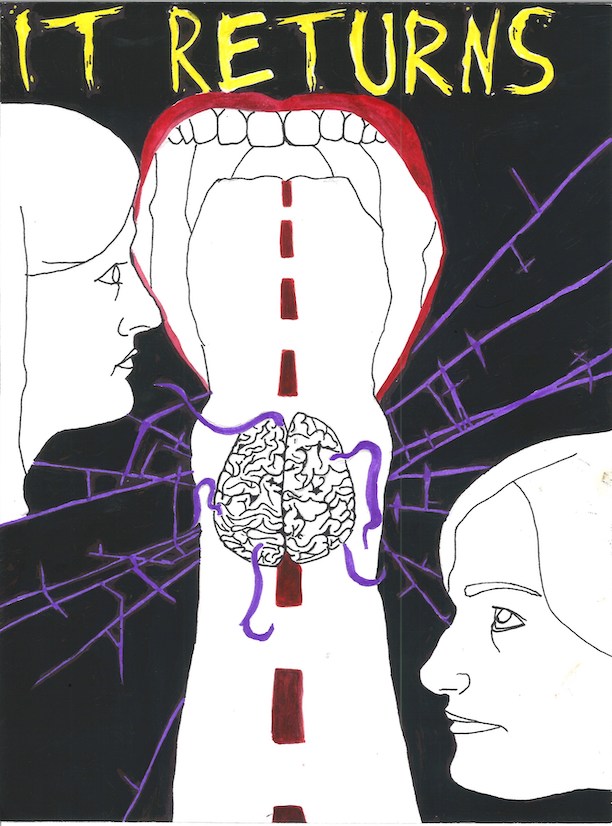
Cassandra interviewed April on a rainy day, the first half taking place sitting on a bench in an academic building, the other half taking place in a cafe. They met on tinder in the spring and have been friends ever since.
Please state your name, your age, and your gender identity and presentation.
My name is April, I am currently twenty years old and I am a cis woman and present as a fairly femme.
So, have you been diagnosed officially with mental illness and which ones?
So that’s a great question, (both laugh) so… when I was… moral of the story, overarching basically is I have been told depression/anxiety. Um… yeah, you’re in the club, right?
Yup!
When I was around I think third or fourth grade is when my pediatrician— I don’t know if you want the whole back story right now?— is when my pediatrician recommended I start seeing a therapist, I don’t remember based on what. That was fine and only lasted a few sessions. It wasn’t until later in my life that I got those official diagnoses, though I remember the therapists I was seeing in my teenage years were very hesitant to diagnose me. I think they worried about diagnoses becoming identity, and didn’t want me to feel as though it was…. Even if it was something I could overcome in my everyday life, they didn’t want my identity be rooted in it. However, I did switch psychiatrists this summer, and those… I don’t know if she’s officially diagnosed me, if that makes sense?
What are your feelings on diagnoses in general?
Um… I mean I have a lot of conflicting feelings. I think the way diagnoses exist now, the criteria can be pretty limiting. Labels are hard and I think determining, for lack of a better word, “normal” vs “not normal” cognition is a very difficult thing to do – particularly when, from a biological standpoint, most of human evolution took place in conditions that are very different from the way they are now, so I think the tension we might experience in our mind could be because we haven’t evolutionarily caught up to what life is like right now… that doesn’t mean that we should just suck it up and get over it, it still sucks and if it’s interfering with someone’s life then it’s important and it needs to be taken seriously.
I think diagnoses can help normalize in that sense and help people realize that what they’re experiencing isn’t just a ‘them’ problem, but a problem that is big and something that a lot of people experience as well. But then there’s also issues for example with insurance. My understanding is that generally, you can’t really be treated and be covered by insurance for mental illness unless you’re diagnosed with something from the DSM, which can be extremely limiting, because there can also be a lot of people who don’t really fall neatly into something in the DSM. A doctor then may have to make a decision; do I falsely diagnose this person with something so that I can treat them or do I not diagnose them and refuse them access to treatment. So, long story short, I have a lot of differing views about diagnoses. I think they have useful times and places but need to be thought about critically and with nuance.
Um… so you gave like, a very brief history, at least in terms of the diagnoses…. On a kind of more personal level…. What has your experience been with mental illness? I know that’s a very general question so you can take it as you want. Just sort…what trajectory has it taken in terms of severity or in terms of how you dealt with it…
Yeah, so I mean, it can sometimes be… a long story because it’s something that I think has always been present in my life, uh, even before that doctor’s appointment that I mentioned, back when I was young, there’s like… one of my first memories of talking to someone about my mental health problems is me…probably no older than ten… in like, a very innocent young kid way, “sometimes when I’m really angry at myself or get frustrated I hit myself, is that normal?”
But… that behavior continued and escalated throughout my life. I remember using self harm, since I was young, as a way to center myself, if that makes sense, and, even before self harm developed, I… I think I had a lot of… weird rituals or difficulty differentiating in my mind what were my personal delusions and what was reality. Like I remember, it was my first day of second grade, and I was at school and I skipped lunch because I convinced myself that if I turned all of the markers in the classroom, like every single marker to face the same direction, then I would have friends by the end of the day… um… I didn’t have friends by the end of the day (both laugh) elementary school was terrible—
Oh no!
But I very distinctly remember that and those started to build on one another and I think that’s where a lot of that frustration of ‘I’m doing all these rituals, what am I doing wrong, there’s something wrong with me’ built up and that’s where the self harm started. So when I was, I think around nine or ten is when I started seeing a psychologist at my pediatrician’s office– I only went a couple of times and she said I was fine, so I stopped going… it wasn’t until I was in sixth grade that the self harm really ramped up and I started… I started gravitating further into the world of self harm, and some of my friends found out and made me go to the school counselor, who recommended I see a therapist so I started seeing the therapist that she recommended– sorry, I’m going very in depth– but one of the things I struggled with a lot at that time was that a lot of girls in middle school, particularly when I was in sixth grade, were calling me, “slut”, and a whore, even though I was literally… eleven years old, um… and… the therapist that I was seeing told me that I was dressing like a slut…. um…
(Sounds of disgust from Cassandra)
Even though I was eleven years old… I remember vividly that day, it was in the summer and I wore a tank top where my bra strap wasn’t fully covered, and I already went through puberty really early as a kid and like… started wearing bras when I was — how old were your in third grade? Like… eight? I started wearing bras when I was eight. I had a lot of issues with my body and puberty in elementary school cause like, I was changing at a different rate than everyone else, y’know… it was not great.
(Both laugh)
I mean, an awful thing for a therapist to say!
It really fucked me up, I mean, more so than I already was… I ended up switching therapists and started doing something I assume a lot of people in similar positions relate to, where you pretend to be fine for their therapists because you just want everything to go away. I would actively go into therapy and put on the personality of one of my friends, very consciously, so that I would be seen as normal and it worked… I started going to therapy less and less but in the meantime everything was getting worse in my own life, um… I…. had started getting…. To backtrack a bit, I had started getting panic attacks when I was in third grade, by now I’m in seventh and eighth grade and those are going up a lot… a lot of depression and anxiety…
(section omitted)
How are you doing with it now?
I think… high school was a lot better, like… a lot lot better. I was on two meds and it improved to the point where the summer before I came to college, my psychiatrist recommended that I try and go off the celexa, um… and I tried to do that and I backslid a bit and um, it was noticed by those around me, like I was acting different. So they put me back on it and I’ve been on those for my first two years of college but um… last year my psychiatrist started making these weird comments to me, really awful ones.
(section omitted)
What are the— if you feel comfortable talking about it— but so the biological side– what do you mean by that?
Your genetics will predict your metabolization of different psychiatric drugs. So this investigation won’t necessarily say what medications are the most effective, per se, but it can recommend dosage levels and you’ll know, ‘you may metabolize this one better’, or ‘the way you metabolize this one may mean you have more side effects,’ etc… since I dropped the bio major I don’t know too much (Cassandra laughs). It’s so cool, neurotransmitters, my dude!
(section omitted)
Something I’ve been talking with my therapist about lately is how I frame everything in my mind around morality and whether I’m a good person and…. if I’m not doing something that makes me a “good person” then I… it’s hard to deal with that.
So this is going to sound like a leading question…
Go on.
But I’m acknowledging that it is so you can know that like….
Yeah.
Um… the really condescending remarks that people have made, do you feel like they are connected to your gender at all?
I do… I… I mean… I think particularly when I was in middle school, there was this idea of, being depressed is just what teenage girls do and so there was this response of, “you’re just doing this because you’re a teenage girl, not because you’re actually experiencing anything wrong.” I think there was definitely subtext behind the comments; the thing that wasn’t being said, was “you’re doing this because you’re seeing your friends do it” or “you’re doing this because you read it in a book, you think it’s cool,” “you think this is what makes you sensitive or different.” So I think those condescending remarks really pushed the message of, “you’re not actually hurting yourself, you want to embody something”… and that was definitely that sense of, “teenage girls are just trying to copy trends or be different or special and that’s why they do these self harming behaviors”.
But… but, say someone is hurting themselves because they want to feel special or different, I feel like that’s concerning anyway. There’s always that idea, the line, “she’s doing it for attention”. Whenever people said that about someone with mental illness or exhibiting signs of mental illness, I was like, ok… sure, but there’s still a problem there, this person wants to say something and no one’s listening, like, that doesn’t mean that they’re an “attention whore” or just not being serious… anyone who is engaging in these behaviors… something is happening and whether that be… diagnosable depression or not… they’re experiencing some trauma in their life that they don’t know how to state, or even if it’s as simple as, they feel lonely, something is happening that is making them not feel good where they are, and that should be considered legitimate. I think that idea of like, “she’s doing it for attention” was definitely the viewpoint from which people made those remarks and how a lot of people view teenage girls in general.
Um… so people… have different relationships with their mental illness and… some of them view it as something external to them, or internal or… so if you were to imagine it made tangible, how would you represent it and your relationship to it? How do you conceive of it?
Yeah…… so the nice thing about therapy lately is… I feel like therapy throughout my life, until I stopped going in high school, was always, what can we do to make sure I survive to the next week. It was always very responsive, in the moment, addressing things that were currently happening, kind of coming up with coping plans, things like that. And I feel like I’m lucky to be in a state right now where I don’t have to think about surviving to next week, I can look back and try to address the root of the problems. So this is actually something I’ve been thinking about a lot. It almost… it feels like my mind is fragmented… so it feels internal in that it is in my mind, but if I were to make it tangible, it’s like all of these different… so when I say “voices”, I don’t mean to say I hear external voices, if that makes sense? I don’t want imply I’m experiencing anything like schizophrenia or hearing things outside of myself. It more feels like there’s a separate part of my mind and not even just one separate part but a number of separate parts – or characters, as my therapist refers to them – that are continually fighting among one another and the only thing they have in common is fighting about me and everything I do and it’s always very different takes and different reasons why something I’m doing is bad. Or I’ll suddenly think, “you think what you’re doing is bad but it’s even worse because like….” and it’s just this constant conversation… yeah, if I had to like manifest, make it something tangible, that’s what it would be probably… whenever something happens and one part of my mind responds to it in one way then another part of my mind is like, “but it’s even worse” and then another part of my mind is like, “but then did you realize….” it just feels like all of these uncontrollable things that are separate from me that have always existed.
So what… I was gonna ask… the question here is, “what things change that relationship”, but it sounds like that’s kind of always the way that it’s been?
I think I’m able to identify it more now…. I mean, I think what it started off as was this feeling that I was always being watched and judged. I remember when I was young, I always thought that there was a raccoon following me, everywhere I went, no matter what, and in car trips I would be looking out the back seat window, trying to see the raccoon. And I always felt like it was this being that was watching everything I do. When I was in elementary school and middle school, that morphed into a small little miniature space ship that was the size of an atom that was filled with everyone I knew and it was following me everywhere and watching everything I did. So it was a constant feeling of being watched and I never had a moment to myself and everything I was doing was being judged. And I think now, it’s not so much I’m being watched by outsiders anymore but constantly being watched and judged in my own head, if that makes sense? As though it’s been absorbed; I’ve felt like I’m being watched and judged so constantly throughout my entire life that now that’s normal… that feeling of never being alone and never being able to act… like, “dance like no one’s watching” because, to me, someone’s always watching, even if it’s just my own mind nowadays.
So… right now… what are the things specifically that make that make your mental state worse or better on a day to day basis?
Um… the feeling that I did something wrong, and sometimes those things are super small and stupid to be upset about. For example, ok, this week I got a ⅘ on a response and I objectively recognize that, yeah, I did good, that was the first response– but that grade made me want to start screaming– and I know that reaction was irrational, but feeling like someone’s mad at me, or feeling in any way that I’m disappointing someone or not living up to expectations or achieving 100%, 100% of the time… when I feel like someone thinks I’m fake or when I think I’m fake or… just regular existence in general, honestly, because I always think to myself, “you’re being fake right now,” “you don’t even know what the real you is,” “no one thinks you’re genuine”… the only time where I don’t feel like I constantly have to be… to some level, like dealing with those reactions is like, when I’m sleeping.
And so some days are…
Exactly, that’s not to say that I’m constantly living in this state — some days are better than others and over the years I’ve developed ways to deal with those reactions and those voices. And some days I’m able to act more rationally than others. But that’s not to say that there’s not always that underlying presence, like even now, there are… like earlier, I started worrying to myself, “you’re making this seem worse than it is, you need to shut up.” That doesn’t bother me as much, cause I feel safe around you and there are a number of reasons that I feel like I’m dealing with it better now than I could’ve years ago. But it still exists and influences how I am thinking about myself and my overall state.
What are the things that make you feel better?
(Pause. Both laugh)
Sometimes I find that’s a harder question.
Sleeping.
Sleeping!
I like sleeping. And I mean that’s why I think that’s why… I mean my sleeping issues are an entirely separate thing but a part of me…
Do you feel like they’re entirely separate?
That’s the question… whether they’re biological or psychological or if you can even separate the two.
How does that affect your mental illness? Like… your being tired?
Yeah, yeah, yeah, it…
It doesn’t have to if–
It does, I’m trying to figure out how to articulate it. Because there are a lot of… for every “voice in my head” each of them has a different take or a different way that they would respond. One is, it makes me feel really shitty and bad about myself cause I can’t be doing as much as I want to do and know I’m able to do… considering that like giving my all to things and trying my best is a really important thing to me and not doing that makes me feel worthless. The fact that I’d rather spend a lot of my time sleeping and there are days where… the past winter, more often than not I was sleeping… that made me feel terrible because I was getting nothing done and I felt worthless and then there’s another half of me that, just experiencing that tiredness makes me feel terrible because there’s a part of my mind that says, “that’s a poor excuse, everyone here feels tired. You have no right to feel bad for yourself or use that as a reason to step back or decide to sleep instead of work, it’s not a valid reason. You’re just being sensitive and looking for attention.” So it definitely affects me in a number of different ways. And then, sleeping also just serves as like the one… safe place I have, so I think I often… I think something that might contribute to it. It’s hard to resist because it is so comforting and so safe of a place for me to be in.
(April and Cassandra start walking through campus together)
What about things while you’re awake that make you feel… like… you’ll still have that running dialogue but like…
Yeah, I think…. I think I pretend I have… one of my irrational fears is that I’m one of those “needy girls” from a movie. One of my biggest fears as a child was that I was going to grow up to be one of those “needy bitchy girlfriends” from a rom com movie, like the girl who’s dating the guy and ends up being dumped… y’know, the non-main character bitch. And that… that’s always been one of my biggest fears. And not just in my romantic life but in every aspect of my life…. I have an umbrella.
Oh no, it’s raining!
(Sounds of umbrella being opened)
I think sometimes it’s hard for me to ask for the reassurance I need, or to ask for someone to say “you’re ok, I still want to be your friend, I still like you,… you’re not getting things wrong”, because I’m so afraid of being needy but that is also… honestly the thing that helps me the most.
So… because of like the weird gendered stereotype of like–
Oh it’s totally a gendered stereotype!
Um… (sounds of rain) like it makes it hard to ask for help even though that’s one of the most…
It makes it really hard, particularly because the help I need is someone saying, “you mean a lot to me, I like you, I love you, you’re important.” And in my mind, asking for that falls under the same category of needily saying to someone “text me back, bitch”… which is not the case and I know it’s not the case, and it’s one of these stupid things where I would never say this to anyone else. If anyone told me they were thinking this way, I would try and tell them that no one would ever view them like that, but it’s how I view myself. But yeah, no, definitely, that fear of being that stereotype… for lack of a better word, the stereotypical bitch who just needs constant attention– I’m afraid to ask for that reassurance that I know makes me feel better because I don’t… I don’t want to look like I’m fishing for compliments, I don’t want to look like I’m needy and I don’t know where to draw the line between what’s ok and what’s annoying… and then there’s part of my mind that’s like, “you’re lying to yourself, you just want your ego to be boosted,” like, “you don’t actually need this,” which just makes everything more complicated.
Well, on… on the note of interacting with others, how much do those around you know about your mental illness? How much do you talk to them?
I feel like I’m… pretty open about it. It was weird because I went to a very small high school and… a high school of around…. each graduating class was around 50-60 people. It was very well-publicized against my knowledge, why I was out of school and all this stuff. And it ended up fine but everyone knew about it and everyone would talk to me about it. And coming here was very weird because I realized that no one knows that backstory, though I feel like I’m still the similar amount of open about it in that I talk about it as though everyone was there, you know what I mean?
Yeah.
So I feel like… in terms of objective experience, talking about it to normalize it to be an advocate, etc, I’m very open, but in terms of talking about things like my fear of asking about reassurance or like… those varying opinions I hear or like… or, not hear, those different opinions that are in my mind– I keep trying to avoid saying “voices in my head” (both laugh).
Subtle plug for a cappella! (referencing the a cappella group, Voices in Your Head)
I can’t take myself seriously! Um… but things like that, I don’t talk about as much because when I talk about them I feel like an “attention whore” or… I feel like no one actually wants to hear about this … for as many people who know I suffer from mental illness, I doubt really any of them know the specifics of my day to day experience with it.
How do you feel like…their knowledge or the things that they know/don’t know color your interactions with them? So this is like a two part question of like… how do you feel people act towards you, knowing what they know and how… aside from the complications around reassurance, how does your mental illness complicate the way you interact with other people?
I think… particularly when people know that mental illness, and specifically my constant feelings of not good enough, is something that I suffer with, there’s a distinct line between reassurance and… it’s made me a lot more sensitive to people being passive aggressive or having an attitude of, “I’m not going to tell you x, y, z or criticism or feedback because you can’t handle it” or treating me as way too delicate, which is not the case – I can take criticism and feedback and things like that… and I don’t necessarily need the person who’s giving me feedback to tell me I’m not a terrible person, I just need someone to tell me that sometimes… but I think the people who know some of it but not all of it, which is most people, start seeing me like I’m fragile, and that makes me feel very self conscious. I feel like I can act very awkward around people because I have an overwhelming desire to ask for reassurance a lot of the time… and don’t feel like I can, which results in me having I think a weird tone with people where… it sounds like I’m being fake when I’m not trying to be, I’m just trying to present myself a certain way or avoid saying certain things that I think would make the other person uncomfortable.
Do you feel like it gets… do you feel like it’s any different when you’re interacting with people who also have mental illness? Like how do you… how do you interact with them?
I think they can tend to be more informed in a way… I don’t as often feel that treatment of, “you’re delicate, you’re fragile” but… sometimes I can almost feel like it becomes this competition. And that might just be me projecting onto them, or my mind. It could be my mind telling me I’m not good enough by saying, “they think of you as competition,” and then I start panicking, am I mentally ill in the right way? Or am I really suffering as much as they are? And because I try and hide a lot of how it currently affects me, I get really freaked out that people don’t take me and my experiences seriously (door creaks as they open it)
(Second part of this conversation took place at a table in Logan cafe)
Aha… so the first… big general question here is, what has your experience been identifying and being perceived as femme, and that’s like a very… broad question but….
Um… could you narrow that down a little bit, like… like my… I feel like…wait, yeah, could you narrow it down a little bit?
Um… how has being femme…. affected you? I guess…. yeah, how has that affected you in your life?
Um… a multitude of ways I think, and if I start rambling and telling too many stories, let me know. Even when I was young, the assumption that “someone was being mean to you cause they liked you” is something that sticks in my brain a lot, just because being bullied was such a big… had such a big impact on my growing up and I think… who I became as like a preteen.
Has that like… affected your relationships now?
I think…. I mean, I’m a very flirtatious person and I have always wondered if that part of my life had some effect on it. Since everyone made fun of me as a kid, and everyone kept telling me, “oh, that’s cause they like you,” sometimes I wonder if I just act perpetually flirtatious so I can do something before they can, almost like a preemptive strike… or I don’t know… I mean… it’s also just fun, and I like having a flirtatious personality and I feel like I shouldn’t need to justify it or defend it, even though I constantly feel the need to.
I feel sexuality as a woman or as a femme-presenting person has always been a contested part of my life, whether it relates back to bullying being seen as romance, or having any aspect of sexuality, even if that just meant I was young and wearing a bra, then I was a slut. I also went to an all-girls school so I had a very interesting and empowering experience being femme presenting and femme perceived, but then I would notice things when we went outside our school. I did a lot of mock trial and there were competitions where we weren’t taken seriously as an all girls team— we were told to smile more while we were cross-examining people or… there was one year where the best we ever did at a competition was after we made a rule that we all weren’t going to wear pants, we were going to wear skirts, because we had been told so many times, “women shouldn’t wear pants in the courtroom” and we were just like, we have to play by their rules or else we’re not going to make it anywhere.
Then I came here and suddenly these guys would come up to me and comment on how aggressive I was in the classroom, but also in this weird way where it would lead to them asking me out, like it was almost seen as different or… there was almost this fetishization of just the fact that I talked in a classroom and fought with them… and maybe I’m making too big a deal… but that was always the vibe I got cause anytime some guy came up to me after class and said, “you’re so aggressive in class”, and made some comments, it always led to some sort of sexualization that I never understood, like… just because I push back at you in class doesn’t mean I’m flirting with you! Or… I was in organic chemistry and this guy tried to explain like, the most simple chem, like… weird mansplaining things that never happened to me because since sixth grade, I had never been in a classroom with cis men, so that was really weird and very hard to adjust to and made me very… not insecure but…. hyper-aware for a bit. I think I’m lucky that I did go to school in a pretty empowered environment for such a big chunk of my life.
What was the experience going to that school? You said empowering so like… elaborate a little bit more?
It’s a discussion I have with people a lot, what the role of same sex schools is going to be in general. As the future goes forward, we challenge our understandings and definitions of gender, as we should… just like any other aspect of life, things change as we understand it more and theories have to develop and adjust to what we come to see as our observations increase and… I don’t think single sex education is exempt from that and it’s hard because… I know I’ve benefited so much from it. It was a place where… for example I honestly don’t know if I would’ve excelled as much at STEM stuff as I did there, but then not just that, just simple things like, raising my hand in class… here, sometimes it feels like everyone is hesitant to push back on each other in class. And like if someone makes a comment, no one will be ask, “what makes you think that?” Or “where in the text do you see that?” Or just pushing back at it. And during my first year, I was just like, holy fuck, am I aggressive, this weird, why is no one else doing this? But I think it was because I went to middle school and high school in such a… for lack of a better word, a bubble where being aggressive had no impact on how I was viewed. In mock trial, we got a comment a lot, from everyone else in our state, like we were the aggressive team. And outside of my state we were kind of the “Aggressive Northerners” but I don’t know if it had to do with being a northerner (April laughs) um…
The war of northern aggression (Cassandra laughs)
No, liter— oh my god, we once had a case where somehow, someone’s affidavit included, “I teach history, my favorite subject is the War of Northern Aggression” and I was like, you worked so hard to put that in there, (groaning from Cassandra) but um… I think everyone’s single sex experience is very dependent on the culture of the school they go to. I was in the middle of Boston, they were teaching sex-ed all the way through and we talking about equality in the bedroom. We were encouraged to ask questions, to critique the representation of female sexuality in the world… so I think there are multiple ways people can experience single sex education and I think I saw a very beneficial side of it. But I definitely still think there are improvements to be made. For example, a lot of schools are very slow on creating policies for non binary students, and I recognize that those can be complicated questions for some in an environment that previously was unquestionably was “a place for women.” I want to see more change but I also understand that very few other schools have made policies and it’s hard to be a leader in that field… I don’t know. I don’t know where I’m going with this. I liked single sex education. It was great for me, I recognize it’s not for everyone, I’m very glad I’m an aggressive person (both laugh).
Well on that note… what does… femme-ness as a very general umbrella term, what does that mean to you?
Like femme presenting? Or femme-ness as like…
Like as an inherent quality, what does it mean to you, how do you define it, and what is your relationship to it?
I have a lot of…. Struggles with this. Because I feel like… it’s a very culturally defined term so it very much depends on the culture you’re in and then you get like, into this subcategory. It’s so… relative…
Well.. to you personally…
I know, I know… I’m thinking about it theoretically. To me personally, like…
I know it’s a hard question.
Yeah, particularly cause I also… I’m coming from a very privileged place with this question because I am a cis woman and I feel like… while I’m not ultra femme, I’ve… never really had to like think very critically about my gender presentation. Before I start just like, word vomiting, I want to specify that that is where I’m coming from. I’m struggling….
Um… I guess another way of reframing the question is, “what does your femmeness look like?” I don’t know if that helps?
Mmhmm… I mean… ok this is going to be very specific to me again because… being femme doesn’t mean you have to have a feminine body at all, and you can present as femme no matter what you physicality is. But I think I grew up for so long being ashamed of my body and trying really hard to hide it. Particularly secondary sex characteristics that I was ashamed of as a kid. To me, being femme and embracing the femme part of me is embracing how my body looks in traditionally femme clothing. So with the caveat that body and physicality shouldn’t be attached to presenting femme in a general sense at all, in what it means to me and what it means when I’m presenting femme is like… kind of reclaiming that shame that I had over my more “feminine” physical characteristics. It’s dressing and presenting in a way that doesn’t hide it, but reclaims it, if that makes sense. And… I worry I’m risking conflating femme with femininity here but that’s the best answer I can think of…
The shame coming from like… being developed early or like..
Yeah… I mean I think that’s what started all of it. That whole process started way earlier for me than I wish it had, and that just kind of like put me on this track of being seen as a hypersexualized individual. And I don’t think that femme requires embracing that sexuality, but… I think I’ve always associated the way my body looks in more femme presenting clothing with sexuality. For example, I’m wearing a tight dress right now and I think for a long part of my youth, I would have associated how I’m dressed with being sexual because you can clearly see my curves and all that. And you can see my legs and to me, because of how people talked about my body and how I presented when I was young, being femme is being able to dress like this and knowing this isn’t necessarily a sexualization of my body, but an acceptance of how it looks, and just being happy with it…. again, I don’t know if I’m giving you the answer you want and I think… I really struggle to… put into words what those terms mean to me but… I would say that I present in a femme way, so I’m asking myself, why do I present the way that I do? And that’s… that’s kind of how I’m going about answering.
Yeah! Um… so you’ve talked a little bit about, like… dealing with sexuality and shame associated so …. and this is like, a more personal question so if you want to pass, that’s fine…
Yeah, thank you.
….but like… as you got older and started becoming more sexually active, how did that… identity change… how did this sort of change affect that sentiment… do you know what I’m trying to express?
Kind of, so like… how did the shame play into that development? Or like how did my relationship with shame change?
Both, yeah, all of the above.
Porque no los dos? (April laughs). Um… I think it’s still something I struggle with… There was a period in my life when I was very shamed for sexuality starting when I was like… eleven to fourteen/fifteen — a period of my life when I was not sexually active, like I didn’t kiss someone until like seventh grade, which is also not sexually active but you know what I mean. The shaming was more towards presentation and desire than it was behavior. I made such a connection between how I dressed and my sexuality that that would give me a lot of shame. I think the shame was a lot more attached to perception than it was to behaviors.
I remember I was in eighth grade and I had a tumblr and some girl in the year above me — the older girls were the ones who were really cruel to me and would call me a slut… I didn’t do sports, so sports was a time when they would talk to their teams and tell them that I was a slut and like that would like change everyone in my grade’s opinion. But ok, a girl in the grade above me found my tumblr and saw that I talked about being bisexual on it and was like, “that’s disgusting”, and of course, there’s a lot of biphobia in there but it was the idea of, what people don’t know won’t bring me shame, which was hard because then I was also struggling with the idea that everything I did was being judged by public audience. And so it was hard for me to like feel like I was ever in a private enough moment that I could behave in a way where it felt like no one was watching or judging. I don’t know, I don’t think it’s something that I’ve completely overcome just yet. And I’m still struggling … So much of how I was viewed by others and my social self worth was dictated by whether or not these girls thought I was a slut.
That makes sense.
Does it? I feel like I’m rambling.
No, no, no, it makes sense!
I was just saying… whatever comes out of my mouth, so if I’m just rambling and you want me to clarify or summarize, please ask me to…
I thought it made sense!
Ok! Good, cool.
Um… (Cassandra hums while reading over her questions)…. um… is there… anything about femmeness or mental illness… but I think you’ve kind of answered for mental illness… so is there anything about inherent femmeness that you feel like you’ve struggled with the most… you’ve also kind of answered but like…
I mean I think sexuality has always been a bit thing for me. Again, to clarify, I am coming from this from a place of privilege because the questions I struggle with in terms of my femmeness aren’t ones that interfere with my well being or day to day life. But I do think I have some confusion… being femme in my mind is in no way tied to biology or physicality. And so I just… feel so confused as to why I feel femme. I struggle so much to answer that question. I don’t think that needs to have an answer, I don’t need a reason to identify as a woman.
This isn’t a great comparison: I know I’m bisexual because I’m attracted to members of just one gender. I’m attracted to a wide variety of people. So there is a very clear reason for why I have this label, but then with gender…. going even broader than femme… I feel comfortable with the label “woman” but I…. want to know why, and I don’t know why and that’s what I struggle with so much. And I still feel confident with that label but it freaks me out that I don’t have a reason for why I do. And that sometimes freaks me out, in more of an existential way, like how can I ever know myself. I feel like I’m struggling to get to the bottom of the reasons behind how I feel. And I don’t think someone needs a concrete reason behind their identity, no one needs a reason to identify as the gender that they are or present in the way that they, but just for myself… I’m so used to everything about me being “a, because of b” and I feel like my gender is not one of them and I think I’m struggling to come to terms with that, even after so many years since I started asking that question.
That is a hard question.
I wake up in the morning like, yes, I’m confident that I’m a woman and I’m confident that I want to present as femme, these are things I feel comfortable and confident in. That should be answer enough for me, I could stop there but then the part of me that wants to critique and question society asks, but why? What about what I’ve learned for these roles makes me comfortable? Or like is there something innate in me that makes me… I just have no idea and I just keep going back and forth on whether gender is an innate psychological thing or if gender is fully a social construct. Then there are days when I’m like, if gender is a social construct, am I giving into it… that’s what freaks me out the most, I think, is trying to determine how much of it is innate and how much of it is learned and like… if it is learned, am I giving into society and letting society win (said in a joking dramatic voice)?
I have read some cool studies… which like, to be fair, it does get into weirdness when you’re looking for empirical scientific evidence for gender, but I have read some cool studies, for example, scientific reasons for transness might be that the brain will recognize itself as a certain gender, separate from the body… which is really cool and I… read a study that actually… each one of your organs also does this thing where it recognizes itself…
You know, I’ve been looking into studies like… there’s someone in Boston who’s doing similar research.
It’s really cool
Like how is each organ is specifically affected by whether you have XY or XX— it is really cool and it’s just a part of… sex is biological— that’s your physicality, and your gender is psychological— that’s your mind and I think presentation is like… in between your gender and your gender role. But… gender roles are so culturally determined so I try to think about, what does being a woman mean to me? When I put aside the gender roles I’ve learned from society… what does it mean to me to be a woman or what does it mean to be femme? Yeah so that’s what I… I sort of have the most problems with.
Um… so do you feel… how… do you feel femmeness and mental illness have interacted? That is also something that we’ve talked a little bit about….
I think they interacted a lot, particularly when I was younger. I think there’s a very stereotyped idea, particularly for femme perceived people, that mental illness is something that is done for attention or to copy the girls around you. Like, “she saw her friend not eat, so now she’s anorexic too”, that sort of thing. I’ve heard it so much. So I think, at least in my experience, it’s very hard to be taken seriously as a woman with mental illness. And then women’s health, particularly women’s mental health is so… not understood in the medical industry. It wasn’t that long ago that no matter what was wrong with you, doctors would just be like, “oh, she’s hysterical” and “oh, the wandering womb strikes again.” There hasn’t been nearly the same amount of research into specific parts of the femme experience that influences health in the same way there has been throughout history with men. There are so many stereotypes and assumptions that female mental health is still hysterical or PMSing or… which is also like, PMSing also a big deal and… when I was in the period of my life when I was attempting suicide a lot, the highest density of my attempts was when I was PMSing.
Your hormones are literally changing.
Exactly. And I feel like we say “oh, she’s PMSing” so flippantly or even mockingly and I felt so ashamed to admit that I get really depressed when I PMS because it felt like I was embodying a stereotype and that felt so stupid. You know what I mean? And I think we are shamed for it. Everything we feel is invalid because it’s blamed on PMS, regardless if we even are. Handling my PMS was a big reason I ended up going on the pill. I went on it partly for acne reasons but also to see if I could cut down my PMS.
It’s this weirdness of it’s like, “oh you’re PMSing” and it’s just used to gaslight people…
Exactly, it’s used to gaslight people in both ways – regardless of whether they are experiencing PMS, you’re basically telling someone, “what you’re feeling doesn’t matter that much” and it’s like, no, this is literally having an effect on how I’m going throughout my day and even if… no matter what I’m feeling right now, the fact that I am feeling it is legitimate and valid. And that matters, even…. Even if it happens once month for a lot of my fertile life, it’s gonna matter.
Teenage guys are so horny when they go through puberty and they don’t have to justify it even though that’s caused by their hormones.
It’s so stupid. And I find it very funny that when someone with a uterus is going through the stages in the menstrual cycle when they’re “PMSing”, I’m pretty sure that’s when their hormone levels are closest to men’s. Cause that’s… a drop in estrogen. So I always find it funny (Cassandra laughs)… when people are like, “what happens when a woman is in office and she gets her period and wars are gonna start”, it’s like, you know why wars would start? Because that’s when she would be closest hormonally to a man (Cassandra laughs). Like… guys start a shit ton of wars. Also, many high level politicians with uteruses are likely post-menopausal and there’s just an inherent misunderstanding of all that. And that conception of PMS was used against me a lot as a kid. As a way to invalidate how I was feeling. And I think I used it a lot against myself as well to invalidate any feelings I had. I… I think the “attention-seeking teenage girl” archetype really played a big part in how I viewed myself and my own mental health struggles as well. Because…. teenage girls in every book and movie I read are moody… and everyone else says that this is normal so it must be that I’m just trying to be like them. And, narrator voice, “it was not normal”.
Um… are there any other identities or things in your life that you feel have interacted with femmeness or mental illness? This is like a catch-all intersectionality question. I know, that’s like a big… feel.
Um… I mean I touched on this a little bit but the intersection of sexuality with gender/femmeness. Particularly when you’re femme because everyone has an opinion on your sexuality when you’re femme-presenting… I think, also because I matured at such an early age, I became sexually aware at an early age so… I had…. the earliest crushes I remember having were these two girls in… like I think the first physical crush of not just like, oh he’s cool, but, wow, I want to kiss her, I want to take her on date, was when I was in sixth grade and no one else was thinking about that stuff… so there were two parts of just having these sexual/romantic feelings in general made me feel like such an outlier and so different and so confused, and I think those feelings have continued throughout my life. So first I’m still struggling with that idea of, it’s ok to embrace my sexual drive and desires, other people aren’t going to judge me… even though ideally I shouldn’t have to depend on other people’s lack of judgement to be confident in myself.
And then the other side of it was like… wow…. never in my life had I seen representation of girls liking girls before. I didn’t even know… I don’t think I knew I was bi until I heard Katy Perry’s “I Kissed a Girl” on the radio and I was like, oh… oh that puts into words the thing that I didn’t even think as a possibility. It’s this weird thing where… it feels so cliche to say I’ve always known, but it’s true in a sense of like… I’ve always felt so not straight. I am into men, I have a boyfriend, I am not 100% gay, but I’d always felt so weird and out of place when I was in situations when my friends were commenting on guys and saying things like, “wow he’s so hot”. I’d play along, but something just felt off or different. And I don’t think I was able to put it into words at all, literally until I heard Katy Perry’s “I Kissed a Girl” … no one ever even explained what the word “lesbian” was to me, so that song was my first exposure to gay culture and that’s when I was realized, huh, now that I think about it, that explains all of these feelings of kind of being on a different… like…. I always noticed when people were talking about having crushes and stuff, something always felt off and I never knew what it was. I still feel weird about trying to put it into terms today because it’s not as though I didn’t also have the potential to be attracted to the people they were talking about, it always just felt like something wasn’t there… and I think that was the limited understanding I had of my sexuality.
I think I struggled with it a lot too because being a teenage girl who’s bisexual and trying to come to terms with it, as well as being a teenage girl who’s told that she was a slut, the two together just felt like ammo sometimes… almost this notion of “you are a hypersexualized person who needs to be shamed for being hypersexualized.” So before high school, my sexual orientation wasn’t considered part of my identity but as a tool for shaming me for if that makes sense? Like it wasn’t like, “she’s attracted to people across the gender identifying spectrum” and much as it was, “she wants to bang whatever moves” or like… a phase I was doing for fun…all these things where it was viewed, not as an identity, but as part of my sex drive and all that. I think that also played into a lot of my shame towards myself and that feeling of like, I must be doing something wrong, I must be making a mistake, I must be a bad person, I must be giving into my carnal desires if I feel this way.
Um… so this actually goes into the next question, which is… I guess these are all personal questions… um…
Go ahead, yeah.
It’s like… we’ve talked about being bi, we’ve talked about shame with sexuality, and about like… feeling the need for reassurance and not being able to ask for it… are there any things you feel like you want to say about the experience of intimacy, whether platonic or romantic, as someone who is a mentally ill woman?
Yeah, um… I’m collecting my thoughts. Um… I mean like you said, I think the reassurance plays a big part in it. Like I was describing before that there are parts of my mind that I don’t agree with but exist anyway. No matter how many times I say, I don’t agree with you, you’re wrong, they’re constantly there and a part of my inner monologue. I think… I almost view myself as… you know the movie The Blob? I’ve never seen it but I’ve heard it described to me (Cassandra laughs)… I feel like my mind is like the Blob. So I’ve never seen this movie but the way it’s been described to me is that this blob rolls down mainstreet and absorbs everything into its being. I feel like my mind is like that except I’ve rolled through my life and every negative comment or opinion on myself or how people in general should behave has been absorbed by my mind. So like all the opinions and thoughts and critiques and things that I’ve ever heard, all those viewpoints now exist somewhere in my mind. My therapist sometimes describes them as intrusive thoughts that I… I can’t control and it makes me want to punch a wall sometimes. These thoughts keep racing through my head and I can’t stop them and I can’t control them. And even if I don’t agree with them, on bad days they’ll keep going and going and going to the point where I’m not sure what’s my own thought and what’s like, these blob-absorbed thoughts anymore. And… so when it comes to sex there are so many opinions and hot takes I’ve heard throughout my life that I do not agree with at all, but nevertheless have been absorbed into my mind and are there in the back of my head. Such as what I need to do to be sexually attractive or what would make me needy versus what I’m allowed to ask for, what I’m allowed to say.
Um… are there any thoughts you have that weren’t covered by the things I’ve asked? Any things that didn’t really fit into any categories?
Yeah, I’m trying to think… I mean I think a lot of it was covered, if not by my questions, by my rambling.
You’re not rambling!
I’m so sorry, you’re going to have to transcribe all of this (April laughs).
I’ll be able to ponder more while I’m transcribing.
And like if there are any follow-up questions that you have or things that you want to touch on, I will remain in your life and you can hit me up for it
Wow!
Yeah, I know, right? Friendship. Um… yeah, mostly I’m pretty proud of my blob metaphor at the end (Cassandra laughs) because I think this entire interview I’ve been struggling to clarify what I mean by these voices I hear cause it’s like… it’s not disembodied, it’s very clearly internal… but it’s not me, if that makes sense? So I think I’ve been struggling this entire time to be like, what exactly do I mean when I say there are these parts of my mind that are saying things. So yeah, I’m happy I got to the blob metaphor. I don’t think it’s something I tell a lot of people, mostly because I struggle to find the words to say it.
And now you have this fun metaphor.
I know! Oh my god, now I need to watch the movie “The Blob” (Cassandra laughs) Like… I don’t know where that came from. The only reason I know it is cause my dad’s like, “My first horror movie was the blob” and he talks about it and I’ve always been like, haha, wimp (Both laugh) and now… and suddenly my dad’s voice, “the blob went down mainstreet” popped into my head and I was like, thanks dad, that gave me the perfect metaphor!
(section omitted)
Um… so yeah… so if you have any questions for me, and that can either be… like, just about this project in general or… like….but also like, I do want this to be more of a conversation than an interview so if there are any questions that you want to turn back on me, like, I want to be….
I mean I think I said this a lot, but particularly with the gender stuff, I’m so lost when it comes to defining lines between “feminine” and “femme”… I know they don’t intertwine for everyone, but it’s hard to talk about my own personal experience without them intertwining. So I just wanted to… my answers were a lot more intertwined with other aspects of my gender identity than I meant them to be. So I wanted to clarify that I… I’m still trying to figure out for myself how to de-twine those things. And struggling with my own personal experience and identity to de-twine them but I… my goal is to one day be able to if that makes sense? Yeah, I wanted to clarify that, cause I think those are really good questions, and the questions I ask myself because it’s always like, what the fuck does it mean? I don’t know. I don’t know why I like this, I don’t know why I feel comfortable doing that, I don’t know why I label myself as this, like, I don’t… like my best answer to everything is I feel like I’m along for the ride and just trying to build the boat as I’m going along on that ride…. that mixed a lot of metaphors.
(Cassandra laughs) I understood.
I’m so glad, you understand.

 The Cassandra Transcripts